
What is Acoustic Flooring?
Acoustic flooring is engineered to reduce sound transmission and absorb impact noise within industrial and commercial environments. Unlike standard resin floor systems, which rely purely on surface performance, acoustic flooring incorporates sound-dampening properties through either the resin formulation itself or an integrated acoustic underlay system.
The technology works through two primary mechanisms: impact sound absorption and vibration dampening. When footfall, dropped objects or machinery create sound energy, the flooring system converts these vibrations into minimal heat energy rather than transmitting them through the floor structure. This is particularly valuable in multi-storey facilities where noise transfer between floors can disrupt operations or breach workplace noise regulations.


Why Sound Absorbing Floors Matter in Industrial Environments
Sound management isn’t simply about comfort; it’s a critical operational and regulatory consideration. The Control of Noise at Work Regulations 2005 set clear exposure limits, and excessive noise levels can trigger operational restrictions and mandatory hearing protection zones. Beyond compliance, acoustic floor insulation delivers tangible business benefits. Reduced ambient noise improves concentration and communication, leading to fewer errors and enhanced productivity.
In quality control areas, lower background noise allows for better auditory monitoring and detection of machinery faults. For facilities with office spaces above production floors, acoustic flooring protects the working environment upstairs without compromising the industrial performance below.
What Type of Acoustic Flooring Do I Need?
Acoustic resin flooring selection depends on your operational environment, chemical exposure, traffic loads and noise reduction requirements. Epoxy systems with acoustic underlays provide excellent chemical resistance for pharmaceutical and food processing facilities requiring both hygiene and noise control. MMA flooring offers rapid installation (ready within hours), making it ideal for retail stockrooms and commercial kitchens where downtime must be minimised.
Polyaspartic delivers UV stability and low odour, suitable for occupied buildings with natural lighting. Polyurethane’s natural elasticity makes it particularly effective for impact noise reduction in logistics, automotive and manufacturing environments with heavy trolley traffic.
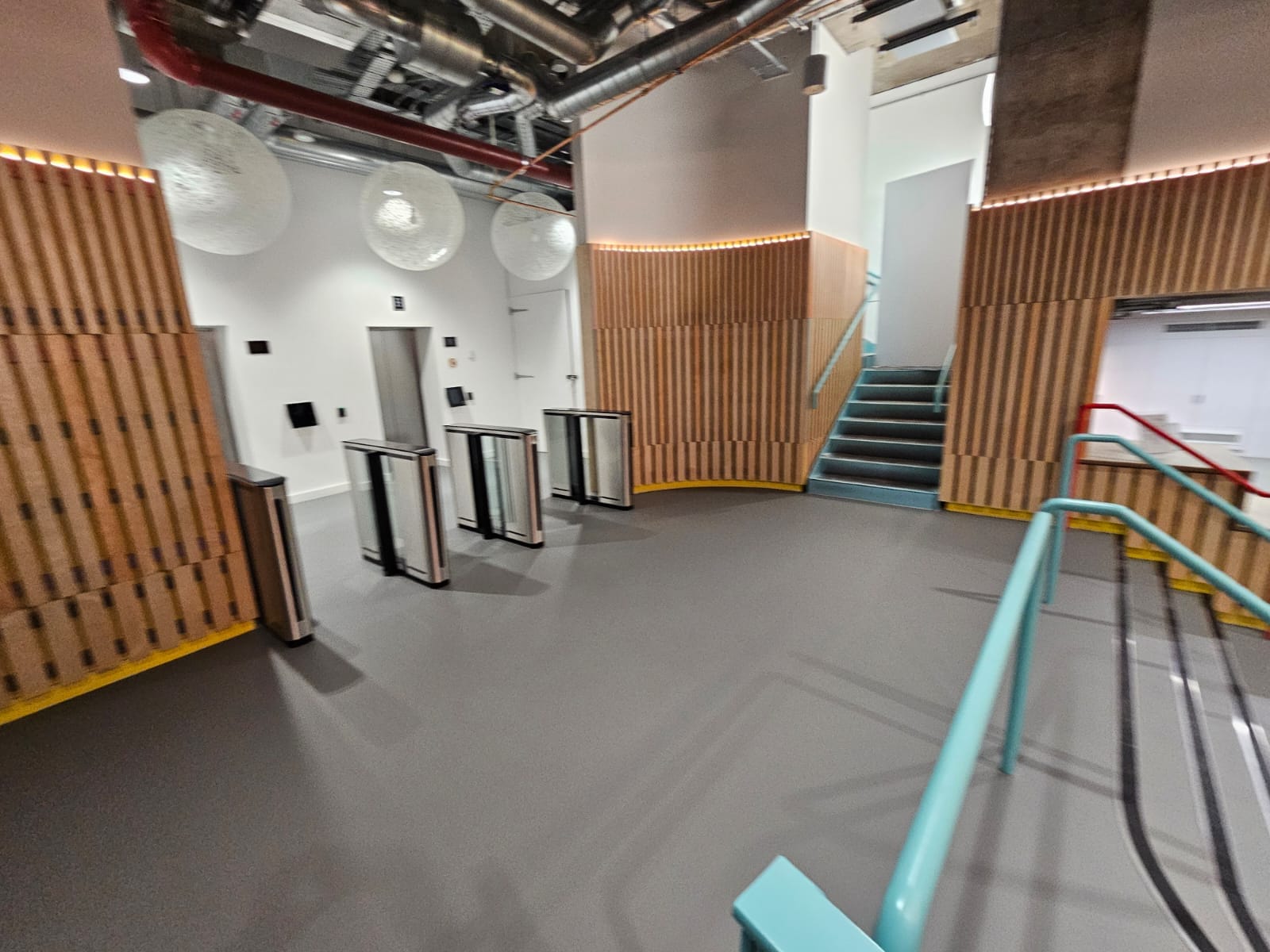




Resin Flooring Gallery
Check out our selection of photos showcasing our installations in various settings.


Let’s kickstart your project!

Request a free survey
Start with a Free Survey. We assess your needs and offer tailored recommendations, costs and proposed work.

Seamless installation
Our team of qualified specialists arrive to begin the proposed work.

Inspection & quality control
Our team of experts will complete a thorough check of the work undertaken and provide any maintenance information.

Frequently Asked Questions
An acoustic floor is a flooring system designed to reduce sound transmission and absorb impact noise. In resin flooring, this is achieved through lower-density formulations (like our Comfort Floor), specialised resin compositions with inherent dampening properties, or acoustic underlay systems installed beneath the resin build-up. The floor absorbs vibrations from footfall, equipment and dropped objects rather than transmitting sound through the building structure.
For existing resin floors, retrofitting acoustic solutions proves challenging. The most cost-effective approach for new installations combines a basic acoustic underlay with a standard resin system, rather than specifying premium acoustic resin formulations. However, “cheap” soundproofing often proves ineffective in industrial settings. Inadequate systems may fail to meet noise regulations, requiring costly remedial work. We’d recommend discussing your specific noise reduction requirements and budget constraints with a flooring specialist who can specify a system that delivers necessary performance without over-engineering the solution.
Acoustic flooring reduces and manages sound levels through absorption and dampening, it minimises noise but doesn’t eliminate it entirely. Soundproof flooring aims to completely block sound transmission between spaces, typically requiring much thicker systems with specialised isolation layers. For industrial applications, true soundproofing proves impractical and unnecessary. Acoustic flooring provides appropriate noise reduction to meet workplace regulations and improve the working environment, whilst maintaining the thin profile and durability required for industrial operations. The distinction matters when setting expectations, as acoustic flooring will significantly reduce noise levels but won’t create a silent environment.
Get a FREE, no obligation survey
To get started, fill out our form to request a Free Survey. We’ll assess your needs and offer tailored recommendations, costs and proposed work.

