
Concrete Floor Polishing for Industrial Sites
We deliver professional concrete polishing that refines the slab itself, not just its surface. By mechanically refining and densifying the slab, concrete floor polishing produces a monolithic surface with no film to chip, peel or delaminate. That is why it stands up to the rigours of industrial use, whilst having the operational benefit of light reflectivity.
In a warehouse, plant or process hall that means a brighter working environment, better visibility and safety around traffic routes and machinery, and a genuine reduction in lighting load and energy cost.
Delivered by experienced polished concrete contractors, that balance of durability, resistance and reflectivity is what makes polished concrete one of the most cost-effective long-term floors an industrial facility can specify.


Why Choose Us?
A consistent industrial finish needs multi-head planetary machines, graded diamond tooling and proper dust extraction, not a hired single-disc polisher. We bring the plant to grind, hone and burnish flat and even, edge to edge. Hardness and stain resistance come from densification applied at the right stage and rate, so we read the slab and apply the correct hardener.
The result is a defined gloss and flatness across the whole area, without the swirl marks, uneven sheen or missed edges of inexperienced work. Done properly, the slab lasts decades with minimal upkeep and no recoating, avoiding the far greater cost of putting a poor floor right later.
Types of Concrete Polishing
A professional polished finish is produced through a controlled sequence of mechanical and chemical steps.
Diamond Grinding (Mechanical)
We begin with coarse metal-bonded diamond tooling to flatten the slab, remove existing coatings or blemishes and expose the desired aggregate profile, whether a cream, salt-and-pepper or full aggregate finish. This is the mechanical foundation of concrete grinding and polishing.
Honing (Mechanical)
We then work through progressively finer resin-bonded diamond grits, refining the surface step by step. Each pass removes the scratch pattern of the last, steadily closing and smoothing the concrete.
Densification (Chemical)
At the correct stage, we apply a lithium or sodium silicate densifier, which penetrates and reacts within the concrete to fill the pore structure and harden the surface. This chemical step is what gives a polished floor its abrasion resistance and durability.
Polishing and Burnishing (Mechanical)
Continuing through the finest grits, we raise the surface to the specified level of sheen, from satin to high gloss. A final burnishing pass consolidates the finish and brings up the reflective clarity.
Stain Guard (Chemical)
We finish with a penetrating guard that improves resistance to oils, spills and staining. It works within the surface rather than forming a film, so there is nothing to wear through or recoat.
Concrete Polishing Applications

Food and Drink Manufacturing
We deliver a dense, easy-clean polished surface that resists staining and reflects light, supporting both hygiene standards and a bright working environment.

Chemical Manufacturing
We produce a densified, abrasion-resistant floor that handles load and wear while standing up to the demands of a working process area.

Pharmaceutical Production
We deliver a low-dust, easy-clean polished surface that helps maintain the cleanliness these facilities require.

Schools and Universities
We polish high-traffic concrete to a hard-wearing, bright, low-maintenance finish for workshops, laboratories and circulation areas.
Concrete Floor Polishing Process
We deliver every repair through a controlled three-stage process.
We test the slab for hardness, aggregate type, flatness and contamination to confirm it is a suitable candidate and to define the achievable finish. This determines the grinding sequence, the densifier and the target gloss level.
We grind and hone through the graded diamond sequence to flatten and refine the surface, applying chemical densification at the correct stage to harden the slab from within. This is where the strength and consistency of the finished floor are built.
We polish through the final grits to the specified sheen, apply the stain guard and burnish to bring up the reflective finish. We then inspect for uniform gloss and flatness across the whole area before handover.
Concrete Polishing Images
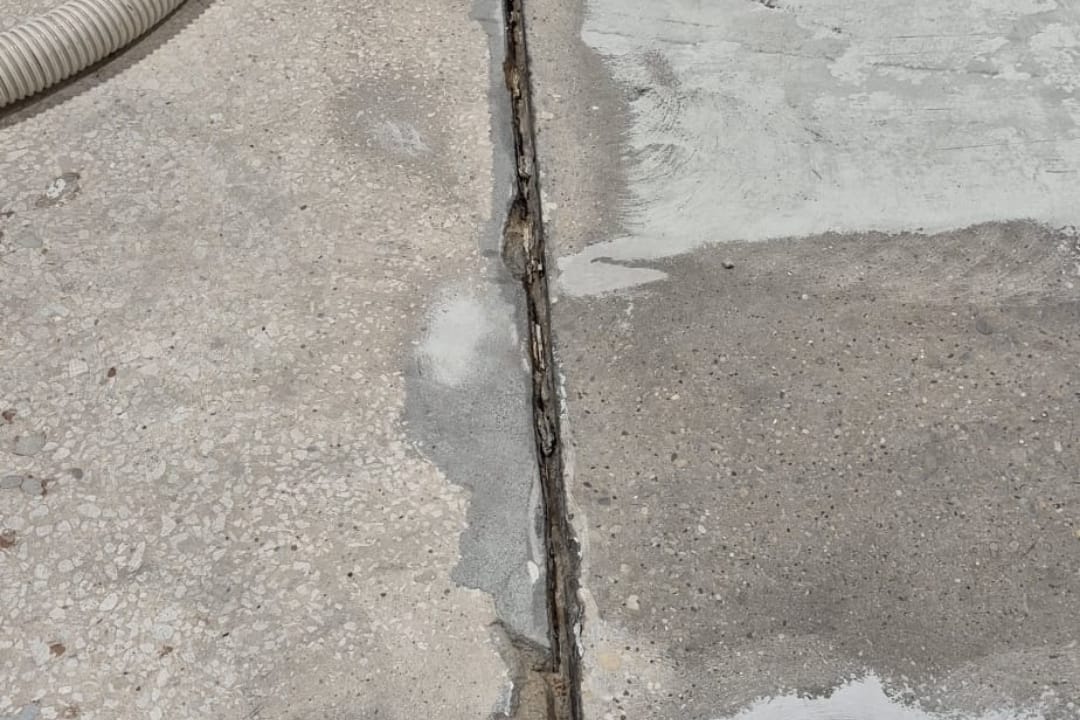
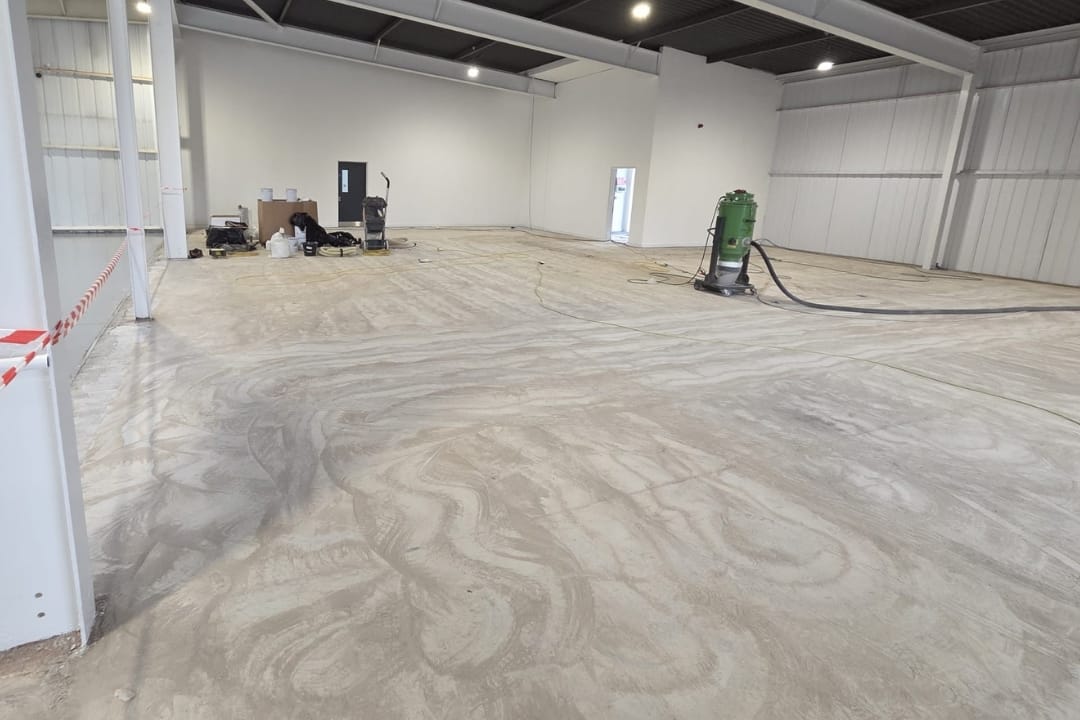
Browse the gallery below to see our concrete floor polishing work, from ground and honed slabs to high-gloss, light-reflective finished floors.

Let’s kickstart your project!

Request a free survey
Start with a Free Survey. We assess your needs and offer tailored recommendations, costs and proposed work.

Seamless installation
Our team of qualified specialists arrive to begin the proposed work.

Inspection & quality control
Our team of experts will complete a thorough check of the work undertaken and provide any maintenance information.
I have questions…
Yes, but very little: routine dust-mopping and occasional damp cleaning with a pH-neutral cleaner keeps the finish performing. Periodic re-burnishing restores sheen in high-traffic areas, with no stripping or recoating required.
Grinding is the preparation stage that flattens and opens the slab, while polishing continues through progressively finer diamond grits with densification to create a hardened, refined finish. In short, all polishing begins with grinding, but grinding alone does not produce a polished floor.
Polished concrete refines the existing slab mechanically, whereas microcement is a thin cementitious coating applied over a substrate. Polished concrete is harder and more abrasion-resistant for industrial use, while microcement offers more colour and design flexibility over uneven or lightweight bases.
No more than other hard floors, and often less, as a dry polished surface is not inherently slippery. Where wet exposure is a risk, we can apply an anti-slip treatment to raise the slip-resistance rating.
Most sound concrete slabs can be polished, provided the surface is hard enough and free of significant contamination or bonded coatings. We assess hardness, aggregate and condition first, as very soft or badly damaged slabs may need repair or densification beforehand.
Yes, old concrete is often an excellent candidate, as years of curing leave it hard and stable. We grind back the worn surface, repair any defects and densify before polishing to reveal a fresh, refined finish.
Polished concrete is designed for interior use, because the smooth finish offers reduced slip resistance when wet and weathering dulls the sheen over time. For external areas we recommend a textured or ground finish rather than a high-gloss polish.
Polished concrete is densified rather than sealed, using a chemical hardener that penetrates and reacts within the slab to close the surface. We then apply a penetrating stain guard that sits within the concrete rather than as a surface film, so there is nothing to peel or recoat.
Yes, for most industrial sites it is one of the most cost-effective floors over its lifetime, combining low maintenance, high durability and no recoating. It also uses the existing slab, avoiding the cost and waste of installing a separate floor covering.
A professionally polished concrete floor commonly lasts 20 years or more, often the life of the building, with only periodic re-burnishing. Lifespan depends on the quality of the installation, traffic levels and routine maintenance.
Get a FREE, no obligation survey
To get started, fill out our form to request a Free Survey. We’ll assess your needs and offer tailored recommendations, costs and proposed work.

