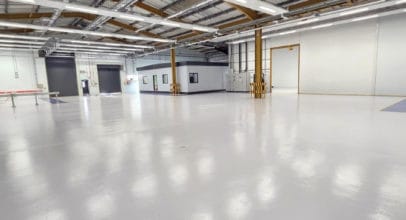
Industrial Unit Floor Refurbishment in Mansfield
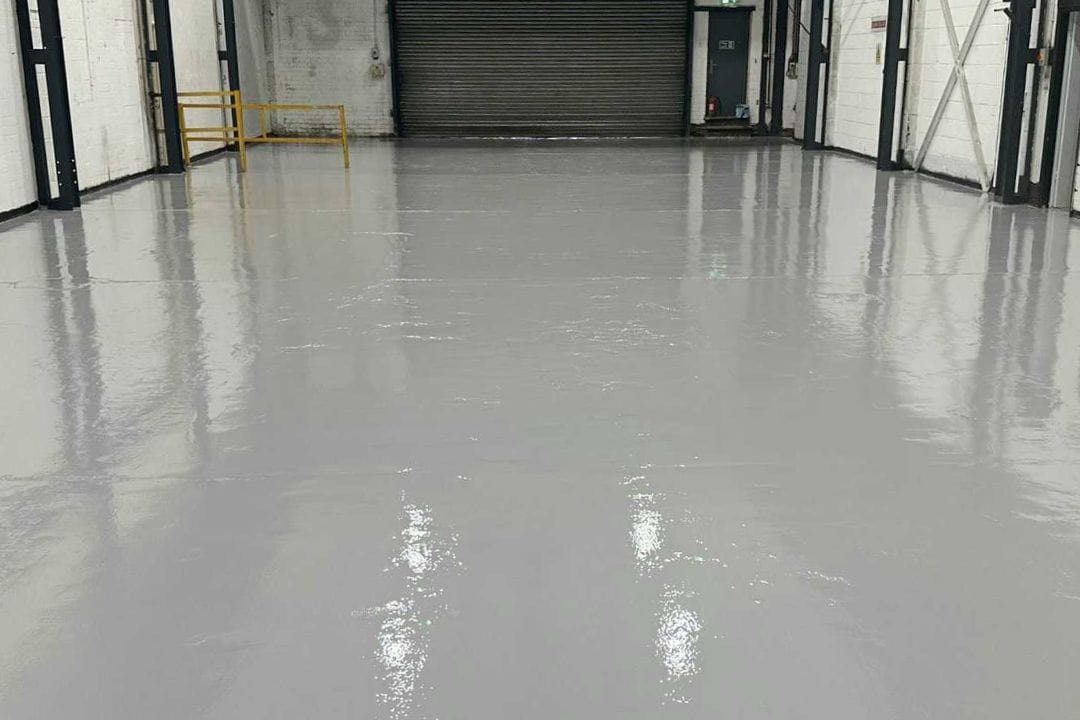
Project Overview
The objective of the project was to significantly improve the working environment within an older industrial building that had heavily damaged and contaminated concrete flooring. Based on the condition of the substrate, particularly widespread oil contamination, the unit is understood to have previously been used for mechanical engineering or workshop activities.
A key requirement was delivering a practical and durable refurbishment solution within a limited budget, while also meeting the client’s time constraints for installation.
Following detailed consultation, several flooring options were presented and discussed. Together with the client, a compromise specification was agreed upon that balanced performance, cost, and programme requirements. It was made clear from the outset that, due to the condition of the existing slab and the chosen system, the finished surface would not be perfectly flat or uniform. However, the solution would deliver a substantial visual and functional improvement to the building overall.
Preparation and Installation Works
The refurbishment process involved extensive preparation of the existing substrate, including:
- Repairing aged, damaged, and contaminated concrete
- Carrying out localised repairs and levelling where required
- Treating areas affected by oil contamination
System Specification and Products
Given the extent of oil contamination present, the specification was carefully selected to ensure long-term adhesion and surface stability. The system comprised the following layers:
- Oil-Tolerant Epoxy Primer: Applied as a penetrating base coat to stabilise the contaminated substrate and provide a reliable bond for subsequent layers.
Epoxy Scratch Coat / Build Coat: An epoxy resin build coat was applied to fill and level low spots across the floor, addressing the unevenness of the original slab and creating a more consistent base profile. - Sherwin-Williams High-Build Epoxy Topcoat: A high-build epoxy finish coat was applied across the entire floor, providing a robust, sealed, and significantly improved surface.
The total applied system thickness is approximately 1.5–2mm. While this is not a heavy-duty build-up, at this thickness the system provides meaningful surface protection, improved chemical and oil resistance, and a cleaner, more hygienic finish, without the cost or programme implications of a thicker screed or overlay system.
Outcome
The completed works have transformed the usability and appearance of the industrial unit, creating a cleaner, more functional working environment while remaining within the client’s financial constraints.
The client is highly satisfied with the results and recognises the value of the tailored specification, which maximised the available budget to deliver a practical and durable flooring solution.
This project demonstrates how a carefully considered refurbishment approach, with the right product selection and thorough preparation, can successfully revitalise worn industrial flooring, even where budgets and timeframes are limited, delivering meaningful improvements without the need for full slab replacement.